Music for Kids
THE AMAZING LIFE GAMES COMPANY
FILMS for children
Robert Hughes - Composer
Ethel Young (1915-2005), a pioneer in early childhood education, developed preschool and K-level curricula for multicultural and mixed-income preschool environments. James Robertson, former head of Design at the San Francisco Art Institute, produced more than a dozen award-winning films for the Amazing Life Games Company (ALGC). The film scripts drew from Young's unique and experimental methods for teaching pre-school children.
Robert Hughes composed for the ALGC team from the mid-1960s working with Richard Beggs (later, audio engineer for American Zoetrope studios), who went on to win the first Academy Award for Sound Design. Performers most often were San Francisco Symphony players. The music was, and still is extraordinary in both content and quality.
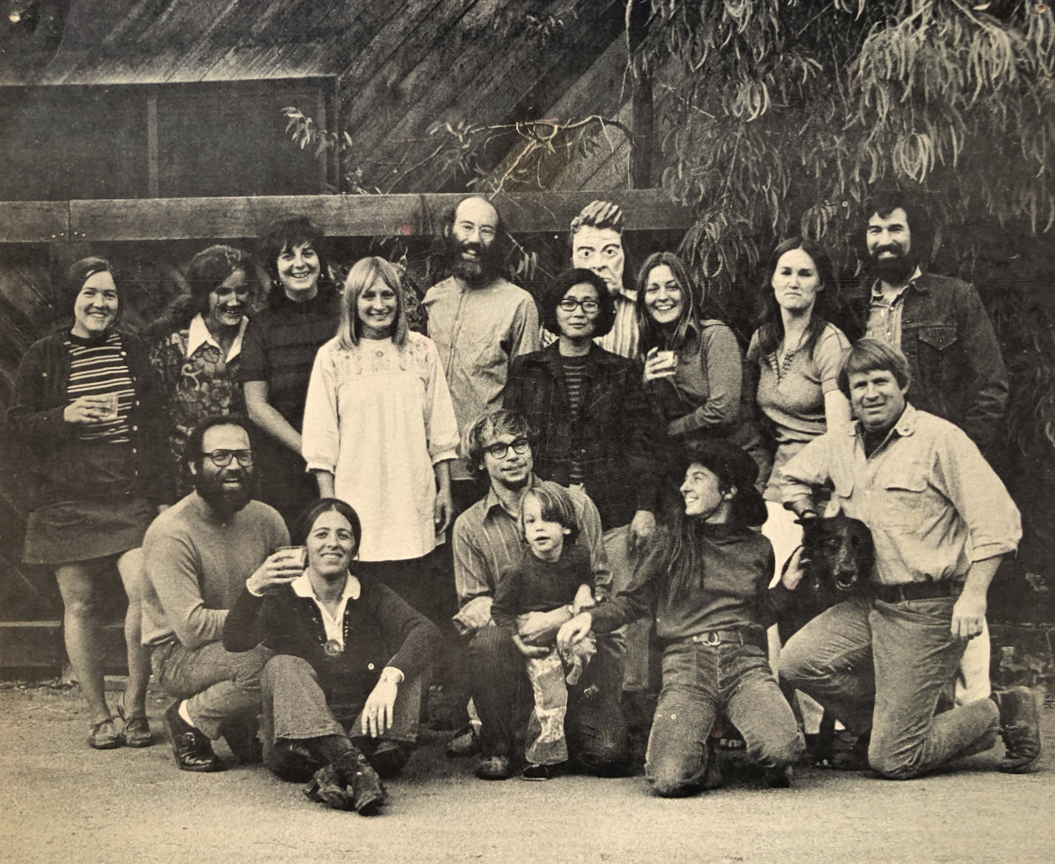
Photograph of the Amazing Life Games Film Team. Jim Robertson is on the lower right. (Robert Hughes is not in the picture.) Robert Hughes Papers
MUSIC for Geraldine
As a professional bassoonist, Hughes often featured the bassoon and bass clef instruments in his compositions. Music for children was no exception.
Music for Geraldine was composed as a serenade for the newly arrived Geraldine Tiepolo, grandchild of Agnes Albert, head of Patrons of Art and Music for the California Palace of the Legion of Honor in San Francisco. Joining the composer on contrabassoon were Donald O’Brien on bass clarinet and Jack van der Wyk on gongs, two musicians who frequently sat in on recording sessions for the Amazing Life Games Company.
The premiere took place at the Old Spaghetti Factory in San Francisco on Sunday January 31, 1965. Music critic Alexander Fried hailed Geraldine in his review of a performance at the Palace of the Legion of Honor. “[She] surely broke all records by being the youngest human being ever to be carried onstage for a concert curtain call” (San Francisco Examiner, February 25, 1965)
The San Francisco Chronicle
2 February 1965
Witty Serenade To a Baby
Review by Robert Commanday
“The wittiest and best-fangled serenade ever dedicated to an infant came a-borning Sunday night in the Old Spaghetti Factory where an unheard-of combo, bass clarinet, contrabassoon and gongs was—in fact—heard.
In Robert Hughes’ Music for Geraldine, the implausible pair of woodwinds cavorted contrapuntally, crooned lullabyes, and became entwined in sepulchral lows.
Between movements, Donald O’Brien who played bass-clarinet marvelously, and the composer who made the contrabassoon talk nothing but beautiful music, helped prepare the gongs for percussionist Jack van der Wyck. For different mutings, the gongs were dressed in shirts, then belts of wide rubber bands, and finally they were placed face down on the cloth piano cover.
To the audience’s delight, Hughes had to say ‘So-long’ twice. He repeated the swinging final movement, entitled ‘Ciao,’ but only after advising the audience to delay the laughter for an eighth-note so they could hear the resolution, a soft gong stroke.
We are unable to report the reaction of Miss Geraldine Tiepolo, aged three months, who was not present at her serenade. The family advised us that she had been hitting the bottle and was sleeping it off.
The Hughes’ serenade was a genuinely musical treat, by no means a stunt."
Music for Geraldine, 1965. Audio CD title Anagnorisis on the Second Evening Art label #AG 1964, 07:15 minutes.
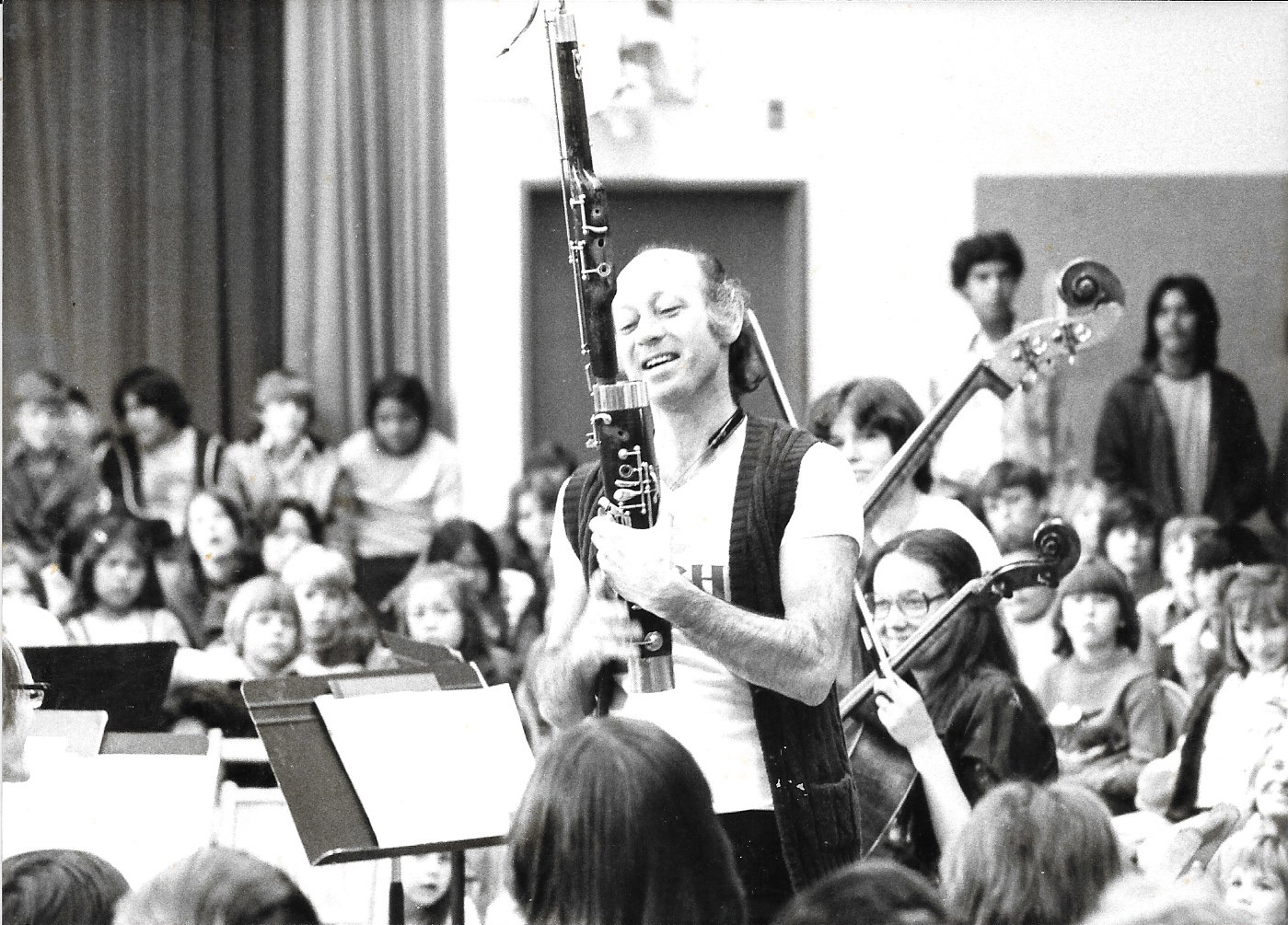
Jim Robertson of Amazing Life Games Co. relocated to Covelo CA with Carolyn Robertson to start the fine art press Yollo Bolly Press. In 1978 when he invited Bob Hughes and the Arch Ensemble for Experimental Music to tour the press and give a concert in town, the ensemble took the opportunity to stop in on an elementary school class to demonstrate their instruments. Bob Hughes is standing with the bassoon. Arch Ensemble members Ami Radunskaya with cello and Michelle Burr with double bass are seated behind him. Robert Hughes Papers
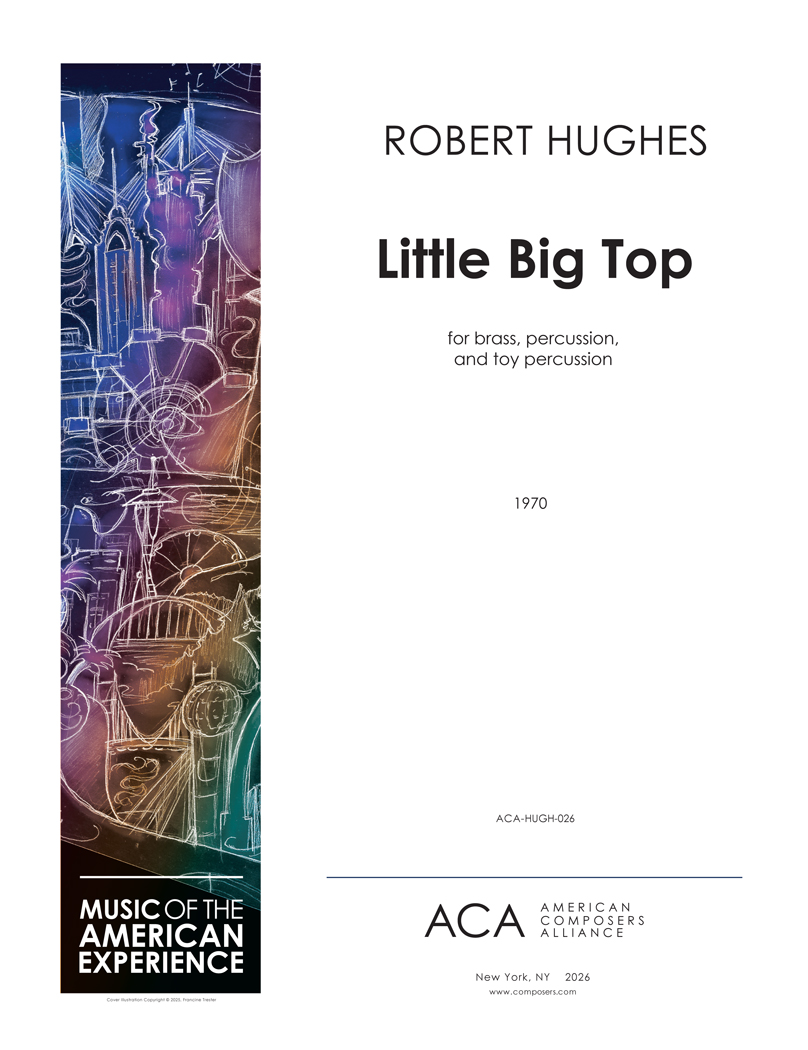
Little Big Top is published as part of the "Music of the American Experience," a project of the American Composers Alliance that celebrates the 250th anniversary of the signing of the Declaration of Independence.
Little Big Top for flugelhorn, trombone, percussion and toy percussion was composed in 1970 for the Amazing Life Games film of the same name. In its four and a half minutes, the piece passes through the many moods of circus: the grand master’s hyperbolic introduction, the parade of performers, the sad clown, a conundrum, suspense (as in the tightrope act), and a return to the grand finale when all forces gather in the ring to perform at once.
The circus-themed music subsequently was synchronized to a one-minute video, “Cowgirl Coffee,” for "Microtheater," a 1991 series of unique works by avant-garde artists produced by earwax productions. It features choreography and performance by Margaret Fisher, who, with co-artistic director Robert Hughes, directed the performance and production company MAFISHCO based in Emeryville CA.
FROM CHILDREN'S FILMS to Documentary,
Art & Feature Films
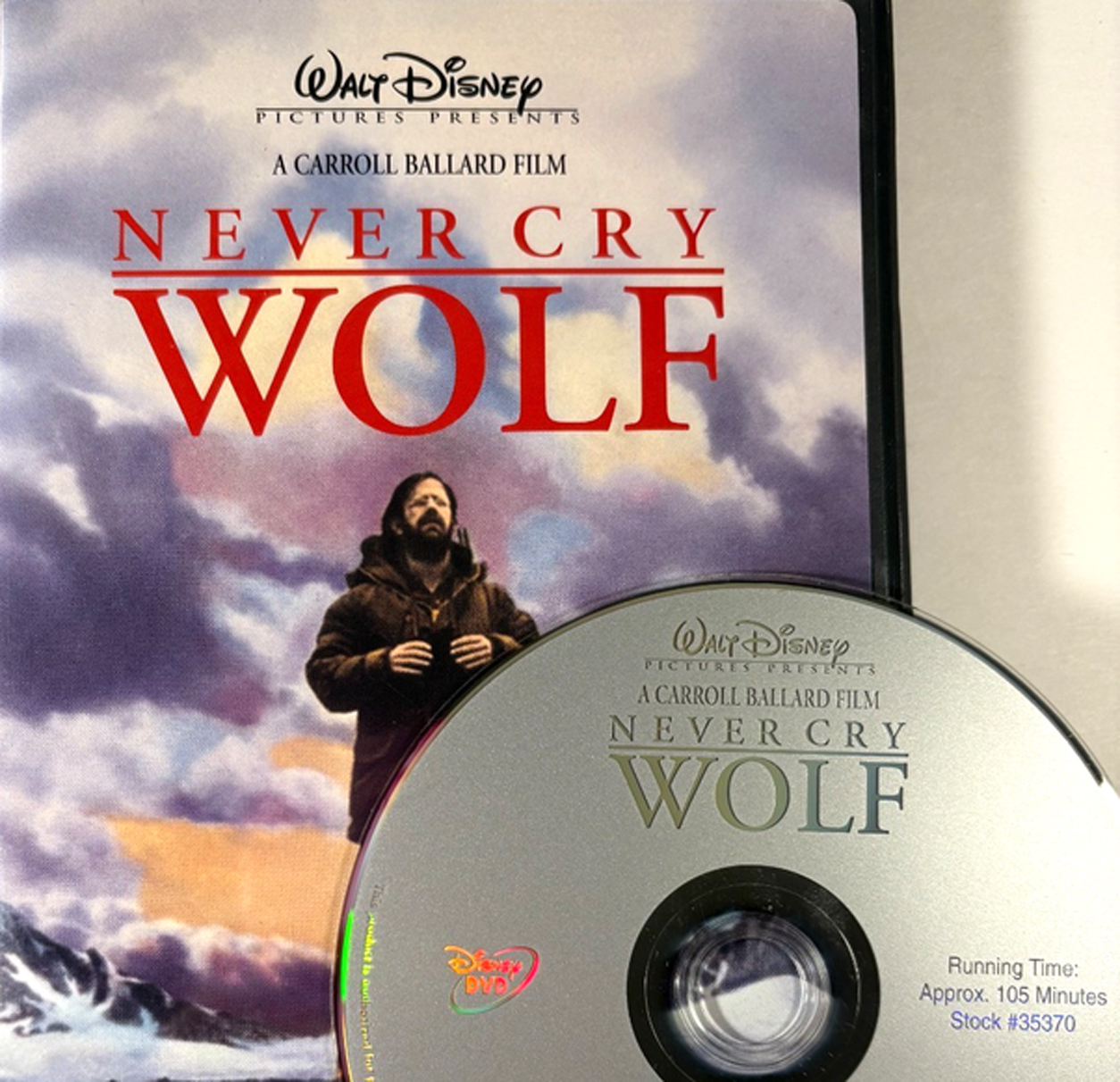
The programmatic composition for children's films proved to be a career ladder to composing film scores for directors as diverse as James Broughton and Carroll Ballard. Three films, including Disney's Never Cry Wolf, would bring the composer to Alaska where he had earlier premiered his concert music and guest conducted. A future post about the Disney film and the composer's affinity for Alaskan natural and native themes is in the pipeline, so to speak.
A YOUTH CHAMBER Orchestra
Concurrent with his work on the children's films, Hughes founded the Youth Chamber Orchestra (YCO) for high school students. The intent was as much educational as it was to update the repertoire and bring attention to the music of living composers and to music outside of the standard canon. Meeting that goal was made possible by the high caliber of the young musicians in the Bay Area who were drawn to the YCO and by the lack of competition from the San Francisco Symphony, which had no youth orchestra at the time, and no interest in contemporary music.
Hughes had a capable partner in realizing his vision. Ethel London, whose three children passed through the YCO, was the ensemble's very capable volunteer manager. She arranged everything from commissions, contracts, tours, and recordings to the printing of fine art programs on expensive paper stock (a big step up from the mimeographed programs widely used at the time).
After a few years of foundational work with the orchestra, Hughes began to experiment with both the repertoire and extra-musical components, programming new music and world music, and introducing non-Western instruments. By 1970, YCO launched the Black Composer in America project: music paired to sociopolitical engagement in the home community of Oakland CA and further afield in cities in Texas and Louisiana. This group of young musicians demonstrated the viability of radical changes to an orchestra's approach to music and to the community. They joined the small handful of professional ensembles in the U.S. who entertained such ambitions such as the Contemporary Chamber Ensemble, American Symphony and Louisville Orchestras, the ONCE group, the San Francisco Tape Music Center, the Group for Contemporary Music, and Orchestra U.S.A. A future Research page will chronicle the many accomplishments of the Youth Chamber Orchestra.
M. Fisher, Trustee, Robert Hughes Papers, October 24, 2026
Music for Kids
THE AMAZING LIFE GAMES COMPANY
FILMS for children
Robert Hughes - Composer
Ethel Young (1915-2005), a pioneer in early childhood education, developed preschool and K-level curricula for multicultural and mixed-income preschool environments. James Robertson, former head of Design at the San Francisco Art Institute, produced more than a dozen award-winning films for the Amazing Life Games Company (ALGC). The film scripts drew from Young's unique and experimental methods for teaching pre-school children.
Robert Hughes composed for the ALGC team from the mid-1960s working with Richard Beggs (later, audio engineer for American Zoetrope studios), who went on to win the first Academy Award for Sound Design. Performers most often were San Francisco Symphony players. The music was, and still is extraordinary in both content and quality.
Photograph of the Amazing Life Games Film Team. Jim Robertson is on the lower right. (Robert Hughes is not in the picture.) Robert Hughes Papers
Jim Robertson of Amazing Life Games Co. relocated to Covelo CA with Carolyn Robertson to start the fine art press Yollo Bolly Press. In 1978 when he invited Bob Hughes and the Arch Ensemble for Experimental Music to tour the press and give a concert in town, the ensemble took the opportunity to stop in on an elementary school class to demonstrate their instruments. Bob Hughes is standing with the bassoon. Arch Ensemble members Ami Radunskaya with cello and Michelle Burr with double bass are seated behind him. Robert Hughes Papers
MUSIC for Geraldine
As a professional bassoonist, Hughes often featured the bassoon and bass clef instruments in his compositions. Music for children was no exception.
Music for Geraldine was composed as a serenade for the newly arrived Geraldine Tiepolo, grandchild of Agnes Albert, head of Patrons of Art and Music for the California Palace of the Legion of Honor in San Francisco. Joining the composer on contrabassoon were Donald O’Brien on bass clarinet and Jack van der Wyk on gongs, two musicians who frequently sat in on recording sessions for the Amazing Life Games Company.
The premiere took place at the Old Spaghetti Factory in San Francisco on Sunday January 31, 1965. Music critic Alexander Fried hailed Geraldine in his review of a performance at the Palace of the Legion of Honor. “[She] surely broke all records by being the youngest human being ever to be carried onstage for a concert curtain call” (San Francisco Examiner, February 25, 1965)
The San Francisco Chronicle
2 February 1965
Witty Serenade To a Baby
Review by Robert Commanday
“The wittiest and best-fangled serenade ever dedicated to an infant came a-borning Sunday night in the Old Spaghetti Factory where an unheard-of combo, bass clarinet, contrabassoon and gongs was—in fact—heard.
In Robert Hughes’ Music for Geraldine, the implausible pair of woodwinds cavorted contrapuntally, crooned lullabyes, and became entwined in sepulchral lows.
Between movements, Donald O’Brien who played bass-clarinet marvelously, and the composer who made the contrabassoon talk nothing but beautiful music, helped prepare the gongs for percussionist Jack van der Wyck. For different mutings, the gongs were dressed in shirts, then belts of wide rubber bands, and finally they were placed face down on the cloth piano cover.
To the audience’s delight, Hughes had to say ‘So-long’ twice. He repeated the swinging final movement, entitled ‘Ciao,’ but only after advising the audience to delay the laughter for an eighth-note so they could hear the resolution, a soft gong stroke.
We are unable to report the reaction of Miss Geraldine Tiepolo, aged three months, who was not present at her serenade. The family advised us that she had been hitting the bottle and was sleeping it off.
The Hughes’ serenade was a genuinely musical treat, by no means a stunt."
Music for Geraldine, 1965. Audio CD title Anagnorisis on the Second Evening Art label #AG 1964, 07:15 minutes.
A YOUTH CHAMBER Orchestra
Concurrent with his work on the children's films, Hughes founded the Youth Chamber Orchestra (YCO) for high school students. The intent was as much educational as it was to update the repertoire and bring attention to the music of living composers and to music outside of the standard canon. Meeting that goal was made possible by the high caliber of the young musicians in the Bay Area who were drawn to the YCO and by the lack of competition from the San Francisco Symphony, which had no youth orchestra at the time, and no interest in contemporary music.
Hughes had a capable partner in realizing his vision. Ethel London, whose three children passed through the YCO, was the ensemble's very capable volunteer manager. She arranged everything from commissions, contracts, tours, and recordings to the printing of fine art programs on expensive paper stock (a big step up from the mimeographed programs widely used at the time).
After a few years of foundational work with the orchestra, Hughes began to experiment with both the repertoire and extra-musical components, programming new music and world music, and introducing non-Western instruments. By 1970, YCO launched the Black Composer in America project: music paired to sociopolitical engagement in the home community of Oakland CA and further afield in cities in Texas and Louisiana. This group of young musicians demonstrated the viability of radical changes to an orchestra's approach to music and to the community. They joined the small handful of professional ensembles in the U.S. who entertained such ambitions such as the Contemporary Chamber Ensemble, American Symphony and Louisville Orchestras, the ONCE group, the San Francisco Tape Music Center, the Group for Contemporary Music, and Orchestra U.S.A. A future Research page will chronicle the many accomplishments of the Youth Chamber Orchestra.
Cover of the score for Little Big Top.
Robert Hughes Archive
Little Big Top for flugelhorn, trombone, percussion and toy percussion was composed in 1970 for the Amazing Life Games film of the same name. In its four and a half minutes, the piece passes through the many moods of circus: the grand master’s hyperbolic introduction, the parade of performers, the sad clown, a conundrum, suspense (as in the tightrope act), and a return to the grand finale when all forces gather in the ring to perform at once.
The circus-themed music subsequently was synchronized to a one-minute video, “Cowgirl Coffee,” for "Microtheater," a 1991 series of unique works by avant-garde artists produced by earwax productions. It features choreography and performance by Margaret Fisher, who, with co-artistic director Robert Hughes, directed the performance and production company MAFISHCO based in Emeryville CA.
FROM CHILDREN'S FILMS to Documentary,
Art & Feature Films
The programmatic composition for children's films proved to be a career ladder to composing film scores for directors as diverse as James Broughton and Carroll Ballard. Three films, including Disney's Never Cry Wolf, would bring the composer to Alaska where he had earlier premiered his concert music and guest conducted. A future post about the Disney film and the composer's affinity for Alaskan natural and native themes is in the pipeline, so to speak.
M. Fisher, October 15, 2026